
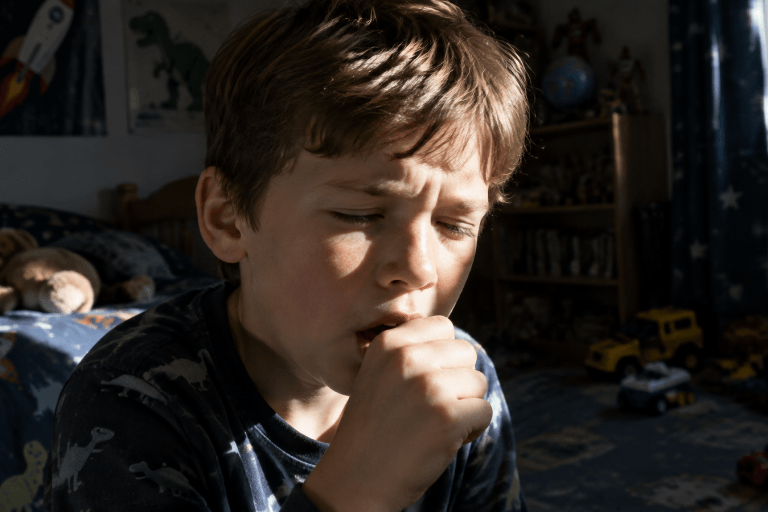
Most coughs in children come from a cold or other viral infection and clear within 1 to 2 weeks. A cough can linger for 3 to 4 weeks after the illness, and this is usually harmless. See a pediatrician if a cough lasts more than 2 to 3 weeks without improving, gets worse after improving, or comes with fast breathing, fever, or poor feeding. A cough lasting more than 4 weeks is called a chronic cough and always needs assessment.
Key Takeaways
- Most coughs follow a cold or flu and settle within 1 to 2 weeks.
- A post-viral cough can last 3 to 4 weeks even when your child feels well.
- A cough lasting more than 4 weeks is a chronic cough and needs a doctor.
- Breathing difficulty, blue lips, or a cough that began after choking needs urgent care. Call 998.
- Asthma, allergies, dry or dusty air, and reflux are common causes of a long-lasting or night cough.
- Antibiotics and over-the-counter cough medicines do not help most coughs.
How Long Should a Cough Last in a Child?
| Cause | Typical cough duration |
| Common cold | 7 to 10 days |
| Flu | Fever settles in 3 to 5 days, but the cough can last 2 weeks or more |
| Post-viral cough | 3 to 4 weeks (sometimes longer) |
| Chronic cough | More than 4 weeks, always needs assessment |
A cough that is slowly getting better is reassuring. A cough that stays the same, or improves and then gets worse, is not.
Types of Cough and What They Can Mean
| Type of cough | What it sounds like | Possible causes |
| Wet (chesty) | Rattly, with mucus | Chest infection, post-viral cough, bronchitis |
| Dry | Tickly, no mucus | Early cold, allergies, dry air, asthma |
| Night cough | Worse when lying down | Asthma, post-nasal drip, reflux |
| Barking | Harsh and seal-like, often with noisy breathing | Croup |
| Whooping | Long bursts of coughing, then a “whoop” or vomiting | Whooping cough |
| With exercise | Coughing or wheezing during or after play | Asthma |
Neither a wet nor a dry cough is automatically more serious. Your child’s breathing, how long the cough has lasted, and other symptoms matter more.
Common Causes of a Long-Lasting Cough in Children
Post-viral cough
After a cold or flu, the airways stay sensitive and irritated for weeks. This is the most common reason a cough lingers when your child otherwise looks well. See our guide to flu in children in the UAE.
Asthma
A cough that is worse at night or with exercise, comes with wheezing, or keeps returning after colds may be asthma. Read our guide to asthma and wheezing in children in the UAE.
Allergies and post-nasal drip
Mucus dripping down the back of the throat can cause a tickly cough, especially at night. A blocked nose, sneezing, and itchy eyes point to allergy (see managing childhood allergies).
Dry air, dust and smoke
In Dubai, dry air-conditioned rooms, dust, and indoor smoke from shisha, bukhoor, oud, or cigarettes can all irritate a child’s airways. See air conditioning and kids’ health in Dubai.
Sinusitis and reflux
A cough with a stuffy nose that lasts more than 10 days may be sinusitis. A cough after feeding or lying down, especially in babies, may be reflux.
Chest infections, including pneumonia
Pneumonia, including “walking pneumonia”, can cause a lingering cough with fever, tiredness or fast breathing. Bronchiolitis in babies is also common in winter (see RSV and bronchiolitis in babies).
Whooping cough
This causes severe coughing fits that can last weeks, sometimes with a “whoop” or vomiting after coughing. In young babies, it can cause pauses in breathing. Read how to protect your child from whooping cough.
Other causes
A cough that starts suddenly after choking or playing with small objects may be from an inhaled object, which is an emergency. Rarely, a long cough with weight loss, night sweats, or contact with someone who has tuberculosis (TB) needs testing.
How to Soothe Your Child’s Cough at Home
- Fluids: keep your child well hydrated to thin mucus.
- Honey: for children over 12 months, a small spoonful at bedtime can ease a night cough. Never give honey to babies under 12 months.
- Moist air: keep rooms comfortable and avoid very dry or cold air from the AC. If you use a humidifier, clean it regularly.
- Saline drops: for blocked noses in babies and young children, saline drops and gentle suction can help.
- Avoid triggers: keep your child away from smoke, incense, strong perfumes, and dust.
- Rest.
Avoid over-the-counter cough and cold medicines in young children unless your pediatrician advises. They do not shorten the illness and can cause side effects. Do not prop a baby’s cot up with pillows.
Do Antibiotics Help a Cough?
Usually not. Most coughs are caused by viruses, and antibiotics only work on bacteria. A doctor prescribes them if a bacterial infection, such as pneumonia or a long-lasting wet cough, is diagnosed. See antibiotics in children: when are they really needed?
When to See a Doctor About Your Child’s Cough
Call 998 or go to the emergency department if your child has:
- Fast or difficult breathing, or ribs pulling in with each breath
- Blue or grey lips or skin
- A cough that started suddenly after choking or playing with a small object
- A baby who is pausing in their breathing
- Extreme drowsiness, or difficulty waking
See a pediatrician if:
- The cough lasts more than 2 to 3 weeks without improving
- The cough improves and then gets worse
- Your child has a fever lasting more than 3 days (see fever in babies and children: what temperature is dangerous?)
- The cough wakes your child at night regularly, or is triggered by exercise or laughing
- There is wheezing, noisy breathing or chest pain
- Your child is eating or drinking less, or has fewer wet nappies
- There is vomiting after coughing, or the cough comes in long fits
- Your child is losing weight, has night sweats, or has been in contact with someone with TB
Always get urgent advice for a baby under 3 months with a cough and a fever, or a cough with poor feeding.
Babies at Higher Risk
Babies born early, or with breathing problems at birth, are more likely to have long-lasting coughs and complications from chest infections. Dr. Olfa’s High-Risk Infant Follow-Up Clinic supports these babies as they grow. Read about the long-term care of premature babies.
How to Reduce Coughs in Children
- Keep up with vaccinations, including the yearly flu vaccine (see the childhood vaccination schedule in the UAE).
- Wash hands often, and teach children to cough into their elbow.
- Keep sick children at home.
- Keep the home smoke-free.
- Clean AC filters regularly.
Frequently Asked Questions
How long should a cough last in a child?
A cold-related cough usually lasts 7 to 10 days. A post-viral cough can last 3 to 4 weeks. See a pediatrician if the cough lasts more than 2 to 3 weeks without improving.
When is a child’s cough serious?
A cough is serious if your child has fast or difficult breathing, blue lips, a high fever that lasts, trouble feeding, or extreme drowsiness. Call 998 for breathing difficulty or blue lips.
Why does my child’s cough get worse at night?
Lying down lets mucus drip down the throat, and the airways are more sensitive at night. Asthma, allergies, reflux, and dry air commonly cause a night cough. Dry air from air conditioning can make it worse.
What is a post-viral cough?
A post-viral cough is a cough that lingers after a cold or flu has gone. The airways stay irritated for 3 to 4 weeks. Your child is not usually contagious, and the cough slowly improves.
Is a wet cough or a dry cough worse?
Neither is automatically worse. A cough that is getting better is reassuring. A cough with fast breathing, fever, or no improvement after 2 to 3 weeks needs assessment.
Can I give my child cough syrup?
Avoid over-the-counter cough and cold medicines in young children unless your pediatrician advises. They do not shorten the illness and can cause side effects. Fluids, rest, and honey (over 12 months) are safer.
Is honey safe for a child’s cough?
Yes, for children over 12 months. A small spoonful at bedtime can soothe a night cough. Never give honey to babies under 12 months, because of the risk of infant botulism.
Does my child need antibiotics for a cough?
Usually not. Most coughs are viral, and antibiotics do not work on viruses. A doctor prescribes them only if a bacterial infection is diagnosed.
Can air conditioning cause a cough in children?
Air conditioning does not cause infections, but dry, cold air and dirty filters can irritate the airways and make a cough last longer. Clean the filters regularly, and avoid blowing cold air directly on your child.
Book a Pediatric Consultation in Dubai
A cough that will not go away is stressful for children and parents. Dr. Olfa Koobar, pediatrician and consultant neonatologist at DHCC, Dubai, can find the cause and put together a clear plan through our Pediatric Health and Wellness service.
Has your child’s cough lasted more than 2 weeks? Call 04 248 1000 or Make an Appointment with Dr. Olfa at DHCC, Dubai. For emergencies, call 998.