
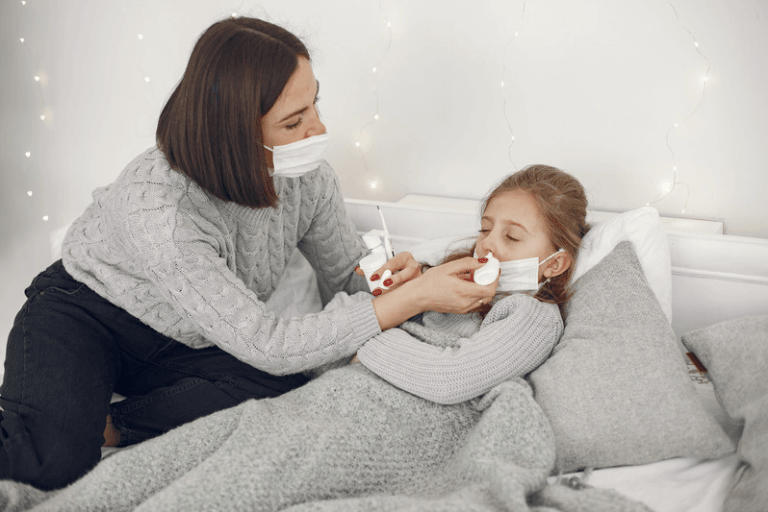
Flu (influenza) in children is a contagious viral infection that causes a sudden high fever, cough, sore throat, body aches, and tiredness. Most children recover at home in 7 to 10 days with rest and fluids, although a cough and tiredness can last longer. Yearly vaccination is the best protection. In the UAE, schools usually ask children to stay home until they have been fever-free for 24 hours without fever-reducing medicine.
Key Takeaways
- Flu starts suddenly with high fever, aches, and tiredness. A cold starts gradually and is milder.
- Most children recover at home in 7 to 10 days, and the cough can last longer.
- Antibiotics do not treat the flu. A doctor may prescribe an antiviral medicine for some children, especially those with asthma, and it works best when started early.
- Dubai Health Authority guidance recommends yearly flu vaccination for children aged 6 months to 5 years.
- Children can return to school after 24 hours without a fever and without fever-reducing medicine.
- Call 998 for trouble breathing, blue lips, seizures, or a child who is very drowsy or hard to wake.
What Is the Flu in Children?
Influenza is a respiratory infection caused by influenza viruses. It spreads through droplets when a child coughs or sneezes, and through shared cups, toys, and surfaces. Children catch and spread flu more easily than adults because their immune systems are still developing and they mix closely at school and nursery. In the UAE, infections increase from mid-November, and the season usually runs from December to February.
Flu Symptoms in Children
Flu symptoms usually appear about two days after infection and come on suddenly:
- High fever, often with chills
- Cough, usually dry, and a sore throat
- Blocked or runny nose
- Body aches and headache
- Extreme tiredness and loss of appetite
- Vomiting or diarrhea in some children, especially younger ones
In babies, look for fever, irritability, poor feeding, and fewer wet nappies.
Flu vs Cold: How to Tell the Difference
| Flu | Cold | |
| Onset | Sudden, within hours | Gradual, over a day or two |
| Fever | Usually high | Mild or none |
| Body aches | Common and strong | Mild or absent |
| Tiredness | Extreme; child wants to lie down | Mild |
| Runny or blocked nose | Sometimes | Very common |
| Cough | Usually dry, can last weeks | Mild to moderate |
| Duration | 7 to 10 days | A few days to a week |
Flu, RSV, COVID-19, and other viruses can look alike, so only a test can confirm which one your child has. See our guide to RSV and bronchiolitis in babies if your baby is struggling to breathe.
How to Care for a Child With Flu at Home
- Offer fluids often. Give breast milk, formula, water, or oral rehydration solution in small, frequent amounts.
- Let your child rest. There is no need to force food or activity.
- Keep the room comfortable. Avoid very dry or cold air from the AC (see air conditioning and kids’ health in Dubai).
- Treat discomfort, not the number. Paracetamol (acetaminophen) or ibuprofen can ease a fever or aches. Always follow the product label for your child’s weight and age, or ask your pharmacist.
- Never give aspirin. It can cause a serious condition in children with the flu.
- Be careful with cough medicines. Avoid them in young children unless your pediatrician advises. Honey can soothe a cough, but only in children over 12 months.
- Watch for warning signs (see below).
A baby under 3 months with a fever needs urgent assessment and should not be given medicine first. Read about what temperature is dangerous in babies and children.
Do Antibiotics Work for the Flu?
No. The flu is caused by a virus, and antibiotics only work on bacteria. They are used only if a complication such as an ear infection or pneumonia develops. Learn more in antibiotics in children: when are they really needed?
Does My Child Need Antiviral Medicine?
Most healthy children recover without it. For children with confirmed or strongly suspected flu, a prescription antiviral can shorten the illness and reduce its severity, especially if it is started within the first 48 hours of symptoms. Doctors consider it most for children at higher risk, including those with asthma. If your child has asthma, read our guide to asthma and wheezing in children in the UAE and call your pediatrician early. Only a doctor can decide whether antiviral medicine is right for your child.
Flu Vaccine for Children in the UAE
The Dubai Health Authority recommends yearly flu vaccination for children aged 6 months to 5 years. It is also advised for pregnant women, people with chronic conditions, and caregivers of babies under 6 months.
- Safety: inactivated flu vaccines cannot cause flu. A sore arm or a mild fever for a day or two can happen.
- Doses: children under 9 who are vaccinated for the first time usually need two doses at least 4 weeks apart. Your pediatrician will advise.
- Nasal spray: a nasal spray vaccine exists for some children. Ask your pediatrician if it is suitable.
- Timing: it is not too late to vaccinate during flu season. If you are travelling, have it at least two weeks before departure.
- Babies under 6 months: they cannot have the flu vaccine. Protect them by vaccinating pregnant mothers and everyone in the household.
See the full childhood vaccination schedule in the UAE.
When Can My Child Go Back to School After Flu?
Most UAE schools ask children to stay home until they have been free of fever for at least 24 hours without fever-reducing medicine such as paracetamol or ibuprofen. Children can continue to spread the virus for several days after symptoms begin, often longer than adults. Your child should also feel well enough to eat, drink, and join in lessons. A cough and tiredness may last longer, so follow your school’s policy. For more preparation tips, see the back-to-school health checklist for UAE parents.
When to See a Doctor or Go to the Emergency Department
Call 998 or go to the emergency department if your child has:
- Fast or difficult breathing, or ribs pulling in with each breath
- Blue or grey lips or skin
- A seizure (see febrile seizures in children)
- Extreme drowsiness, confusion, or difficulty waking
- A stiff neck or severe headache
Call your pediatrician the same day if your child has:
- A fever lasting more than 3 days, or a fever that returns after improving
- A cough that suddenly gets worse
- Signs of dehydration, such as no wet nappy in 8 hours or very little urine (see signs of dehydration in infants)
- Ear pain, or wheezing in a child with asthma
- A fever in a baby under 3 months, which is always urgent
Children at Higher Risk From the Flu
Flu is more likely to cause complications in children under 5 (especially under 2), children with asthma or other chronic conditions, and premature babies. Dr. Olfa’s High-Risk Infant Follow-Up Clinic supports babies born early or with medical needs.
How to Stop Flu Spreading at Home and School
- Wash and dry hands regularly, especially after coughing or sneezing.
- Teach children to cough or sneeze into a tissue or elbow.
- Keep a sick child away from siblings where possible.
- Do not share cups, towels, or utensils.
- Keep sick children at home.
- Ventilate rooms when you can.
See our guide to common pediatric infections and prevention tips.
Frequently Asked Questions About Flu in Children
How long does flu last in children?
Flu usually lasts 7 to 10 days. The fever often settles within 3 to 5 days, but a cough and tiredness can continue for longer.
How do I know if my child has the flu or a cold?
The flu comes on suddenly with high fever, body aches, and extreme tiredness. A cold starts gradually with a runny nose and mild symptoms. Only a test can confirm the flu.
Can the flu vaccine give my child the flu?
No. Inactivated flu vaccines cannot cause influenza. Some children have a sore arm or a mild fever for a day or two.
Does my child need two doses of the flu vaccine?
Children under 9 who are vaccinated for the first time usually need two doses, at least 4 weeks apart. After that, one dose a year is usual. Ask your pediatrician.
When can my child go back to school after flu?
After 24 hours without a fever and without fever-reducing medicine, and once they feel well enough to join in. Follow your school’s policy.
How long is a child with flu contagious?
Children can spread flu from about a day before symptoms start until several days after, and sometimes longer than adults. Keep them at home until the fever has gone.
Can I give my child antibiotics for flu?
No. Antibiotics do not work against viruses. A doctor prescribes them only if a bacterial complication develops.
Can babies get the flu vaccine?
Not under 6 months. Protect young babies by vaccinating pregnant mothers and household members, and by keeping them away from sick people.
Is “stomach flu” the same as flu?
No. “Stomach flu” is gastroenteritis, an infection of the stomach and intestines. Influenza is a respiratory virus, although some children with the flu also vomit.
Book a Pediatric Consultation in Dubai
If your child has flu symptoms, is at higher risk, or you want to discuss flu vaccination, Dr. Olfa Koobar, pediatrician and consultant neonatologist at DHCC, Dubai, can help. See our Pediatric Health and Wellness service for sick-child care and check-ups.
Is your child showing flu symptoms, or do you want to discuss the flu vaccine? Call 04 248 1000 (Sat to Thu, 9:00 am to 7:00 pm) or make an Appointment with Dr. Olfa at DHCC, Dubai. For emergencies, call 998.
Sources: Dubai Health Authority guidance on seasonal flu vaccination, as reported by Khaleej Times; UAE school and pediatrician guidance on staying home with flu, as reported by Khaleej Times.