Asthma is a long-term condition in which the airways become inflamed and narrow, causing symptoms such as wheezing, coughing, chest tightness, and shortness of breath. In the UAE, dust and sand, viral infections, smoke, air pollution, strong fragrances, and indoor allergens may trigger symptoms. Wheezing doesn’t always mean asthma, especially in babies and toddlers, but repeated or severe wheezing should be evaluated by a pediatrician.
Key Takeaways
- Wheezing is a high-pitched whistling sound caused by narrowed airways. It is often more noticeable when a child breathes out.
- Many babies and toddlers wheeze during viral infections and do not go on to develop asthma.
- Asthma is more likely when wheezing keeps returning, occurs at night or during exercise, or is associated with eczema, allergies, or a family history of asthma.
- Common triggers in the UAE may include dust storms, viral infections, smoke, bukhoor, strong perfumes, indoor dust, mold, and poorly maintained air-conditioning systems.
- Asthma can usually be controlled with the right medicines, correct inhaler technique, trigger management, and a written asthma action plan.
- Call 998 immediately if your child is struggling to breathe, cannot speak or feed normally, becomes unusually drowsy, or has blue or grey lips or skin.
What Is Wheezing in Children?
Wheezing is a whistling or squeaky sound that comes from narrowed airways. It is most often heard when a child breathes out, and it can happen with a cold, an infection, or asthma. Infants may also wheeze with bronchiolitis. Read more about RSV and bronchiolitis in babies.
Wheezing or Asthma? How to Tell the Difference
| Likely a one-off wheeze from a cold | More likely asthma |
| Starts with a runny nose or cold | Keeps coming back, with or without colds |
| Settles within days | Cough or wheeze at night or early morning |
| Child is under 2 and has no allergies | Cough or wheeze with exercise, laughing, or crying |
| No family history of asthma or allergies | Family history of asthma, eczema, or allergies |
| No clear trigger apart from the infection | Symptoms are triggered by dust, smoke, pets, exercise, or cold air |
This comparison is only a guide. A pediatrician should assess repeated, severe, or unexplained wheezing.
Doctors cannot always diagnose asthma in toddlers after a single episode of wheezing. Diagnosis is based on your child’s symptoms, medical and family history, physical examination, and pattern over time. Your pediatrician may also consider how your child responds to prescribed treatment. Do not start or stop asthma medicine without medical advice.
Signs and Symptoms of Asthma in Children
- Wheezing or a whistling sound when breathing
- A dry cough that is worse at night, early morning, or after play
- Fast or labored breathing
- Chest tightness, or a child who says their chest “hurts” or “feels funny”
- Getting tired quickly during exercise
- Colds that always “go to the chest” and take weeks to clear
Common Asthma Triggers in the UAE
Dust and Sand
Dust storms and construction dust can inflame the airways. On hazy days, keep windows closed, limit outdoor play, and have your child shower and change clothes after being outside.
Autumn Colds and Viral Infections
Viral infections are a common trigger of asthma symptoms and flare-ups in children. Colds may spread more easily when school routines resume. Ask your pediatrician which vaccinations are recommended for your child. Annual influenza vaccination may be recommended for children with asthma, depending on their age, health history, and local guidance. See the childhood vaccination schedule in the UAE.
Air Conditioning, Dust Mites and Mold
Air conditioning does not cause asthma, but dirty filters, damp ducts, and mold can trigger symptoms. Cold, dry air blowing directly on a child can also irritate sensitive airways. Clean AC filters regularly and read our guide to air conditioning and kids’ health in Dubai. Wash bedding weekly in hot water to reduce dust mites.
Smoke and Strong Scents
Cigarette smoke, shisha smoke, bukhoor, oud, incense, scented candles, and strong perfumes may trigger symptoms in some children. Keep your home and car smoke-free. If burning incense is part of your household routine, keep your child away from the smoke and ventilate the area. Avoid using scents as a substitute for medical treatment or prescribed asthma medicines.
Allergies and Eczema
Asthma may occur alongside allergies or eczema, particularly in children with a personal or family history of allergic conditions. If you notice a consistent relationship between symptoms and a particular allergen, discuss it with your pediatrician rather than removing foods, pets, or other household items without medical guidance.
Read our guides to managing childhood allergies and pediatric eczema in the UAE climate.
Exercise and Weather Changes
Exercise can trigger coughing or breathing symptoms in some children, particularly when asthma is not well controlled. Children with asthma should generally be encouraged to stay active. Ask your pediatrician whether your child needs a warm-up routine or prescribed reliever medicine before exercise. Follow the child’s written asthma action plan.
How Is Asthma Diagnosed in Children?
A pediatrician will ask about symptoms, triggers, and family history, listen to your child’s chest, and check how they respond to a reliever inhaler. Breathing tests (spirometry) are usually possible from around 5 to 6 years of age. Allergy tests may be suggested if triggers are unclear. A chest X-ray is not routinely needed unless another cause is suspected.
How Is Childhood Asthma Treated?
Treatment follows a written asthma action plan from your pediatrician.
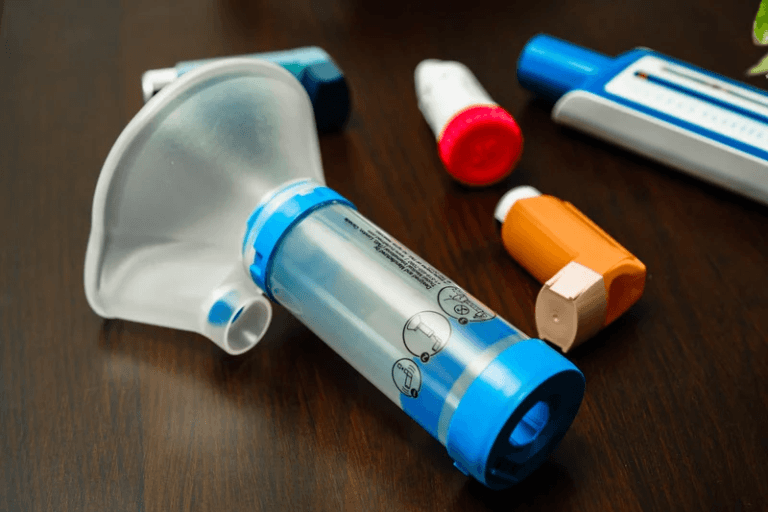
- Reliever inhaler: a fast-acting inhaler (for example, salbutamol) opens the airways during symptoms. In children, it is given with a spacer, and sometimes a mask.
- Controller (preventer) medicine: a daily low-dose inhaled steroid is used if symptoms are frequent. It calms airway inflammation and reduces attacks.
- Trigger control: avoiding smoke, dust, and other triggers lowers the need for medicine.
- Regular review: doses and plans change as your child grows.
Your pediatrician will give the exact medicine, dose, and technique for your child. Do not adjust doses yourself.
What to Do During an Asthma Attack
- Stay calm and sit your child upright.
- Give the reliever inhaler through the spacer exactly as written in the action plan.
- Keep your child away from any trigger, such as smoke or dust.
- If symptoms do not improve quickly, or you are unsure, call 998 or go to the nearest emergency department.
Emergency Signs: Call 998 Immediately
- Struggling to breathe, or the skin between the ribs or at the neck pulling in.
- Unable to speak in full sentences, cry, or feed
- Blue or grey lips or face
- Drowsiness, confusion or exhaustion
- The reliever inhaler is not helping, or is needed again within 4 hours
A child with a fever and breathing difficulty also needs urgent assessment (see fever in babies and children: what temperature is dangerous?).
Home Checklist for Parents of Children With Asthma
- Keep a copy of the asthma action plan at home and give one to your child’s school nurse.
- Check inhaler and spacer technique at every visit.
- Replace expired inhalers.
- Clean AC filters and wash bedding regularly.
- Keep the home smoke-free.
- Book regular check-ups (see the importance of regular pediatrician check-ups).
Frequently Asked Questions
What are the first signs of asthma in a child?
The first signs are usually a night cough, wheezing, fast breathing, and a cough that appears with exercise, laughing, or colds. If symptoms keep returning or last for weeks, a pediatrician should assess them.
Is wheezing always asthma?
No. Many babies and toddlers wheeze during viral infections such as bronchiolitis and never develop asthma. Wheezing that keeps returning or occurs outside of colds is more likely to be asthma.
Can a child outgrow asthma?
Many children with early-childhood wheezing improve as their airways grow. Asthma can continue or return later, so keep regular follow-up with your pediatrician.
Does air conditioning cause asthma in children?
No. Air conditioning does not cause asthma, but dirty filters, mold, dust, and cold air blowing directly on a child can trigger symptoms in children who already have it.
Can dust storms trigger asthma in the UAE?
Yes. Dust and sand particles irritate the airways. Keep children indoors with windows closed during dust storms, and use the reliever inhaler as directed if symptoms start.
Are asthma inhalers safe for children?
Yes. Inhalers prescribed by a pediatrician and used with a spacer are safe and effective. Inhaled preventer medicines act mainly in the lungs, and your doctor will use the lowest dose that controls symptoms.
Can children with asthma play sports?
Yes. Exercise is healthy for children with asthma. With good control and an action plan, most children can play normally. Ask your pediatrician whether your child should use a reliever before activity.
When should I take my child to a pediatrician for a cough?
See a pediatrician if the cough lasts longer than 3 weeks, wakes your child at night, comes with wheezing or breathlessness, or keeps returning.
Book a Pediatric Consultation in Dubai
Early assessment and a clear asthma action plan can help children sleep better, stay active, and reduce the risk of severe flare-ups. Dr. Olfa Koobar, pediatrician and consultant neonatologist at DHCC in Dubai, supports families with children’s respiratory and allergy concerns through the Pediatric Health and Wellness service.
If your child is wheezing, coughing at night, or experiencing repeated breathing symptoms, call 04 248 1000 or make an appointment with Dr. Olfa at DHCC, Dubai.